
 GPhC Registered: 9012621
Erythromycin for Cellulitis

- Antibiotic for skin infections if you’re allergic to penicillin, including in pregnancy
- 500mg four times a day for 5 days
- Free online clinical assessment by a UK prescriber
- Private prescription included
- Next-day delivery available*
If you have cellulitis – an area of skin that is red or darker than usual, hot, swollen, painful and spreading – we may be able to help. You’ll need to complete a simple online consultation so our prescribers can recommend the best option for you.
Want your order delivered on Tuesday?
Order now and we'll dispatch it on the next working day.
Experienced UK-registered prescribers
Owned by qualified doctors
2-minute consultation
UK-wide express delivery
Product information: Erythromycin for Cellulitis
What is erythromycin?
Erythromycin is a prescription antibiotic from a group of medicines called macrolides. It is one of the antibiotics recommended in UK guidance for cellulitis in people who are allergic to penicillin, and it is the preferred option during pregnancy. It works by stopping bacteria from making the proteins they need to grow.
Erythromycin is not suitable for everyone, such as people with certain heart rhythm problems or who take some other medicines. Your prescriber will check your medical history to make sure it is safe for you.
Who can get erythromycin for cellulitis?
Erythromycin may be suitable if you:
- Are allergic to penicillin
- Have an area of skin that is red or darker than usual, hot, swollen and painful
- Have redness that is spreading, often on your lower leg
- Feel otherwise well, without a high temperature, shivers or feeling very unwell
- Do not have the infection near your eye or on a large part of your face
- Are pregnant or breastfeeding, or cannot take clarithromycin or doxycycline
Cellulitis is a bacterial infection of the deeper layers of the skin and usually needs antibiotics. Our prescribers will check your symptoms to make sure treatment at home is safe for you.
During your online consultation, we’ll ask you about:
- Where the infection is and how quickly it is spreading
- Whether there was a cut, graze, bite or broken skin
- Any symptoms of feeling unwell, such as fever or shivering
- Any medical conditions you have, such as diabetes or swelling in your legs
- Past or present allergies, especially to penicillin
- Any medication or treatments you’re currently having
- If you’re pregnant or breastfeeding
This will help your prescriber find a treatment that’s safe and effective for you. Antibiotics are only prescribed when clinically appropriate to reduce unnecessary antibiotic use and antimicrobial resistance.
How it works
Online consultation
Fill out a simple online form with no GP or pharmacy visits.
Clinical review
A UK-registered pharmacist reviews your details to decide the best treatment option for you.
Receive your prescription
If prescribed, you can get express delivery in discreet packaging right to your doorstep.
Delivery Information
Royal Mail Tracked 24
1–2 working days
£3.99
Royal Mail Special Delivery
Guaranteed next working day delivery
£8.95
Discreet Packaging
All orders are sent in plain, unmarked packaging with no indication of the contents. Your privacy is our priority.
Side Effects
Like any treatment, erythromycin can cause some side effects, although not everybody gets them. Most are mild and pass with time, such as:
- Feeling sick or being sick
- Stomach pain or cramps
- Diarrhoea
- Loss of appetite
We’ll explain what to look out for and ways to manage any side effects.
Rarely, erythromycin can cause serious side effects. Stop taking it and get urgent medical advice if you have a fast or irregular heartbeat or fainting, hearing loss or ringing in your ears, yellowing of your skin or eyes, or severe diarrhoea with blood or mucus.
Please call 999 or go straight to A&E if you have:
- Difficulty breathing or swallowing
- Swelling of the face, lips, tongue or throat
- A severe skin rash with blistering, peeling or sores
If you notice any changes not listed above or if any side effects become difficult to manage, please speak to your doctor or pharmacist for further guidance. You can also report it through the Yellow Card Scheme to help others take their medication safely.
Frequently asked questions about Erythromycin for Cellulitis
You can only buy erythromycin online for cellulitis if it’s been prescribed to you by a UK-registered prescriber after a clinical assessment.
If you think you have cellulitis and are allergic to penicillin, you can complete an online consultation reviewed by one of our experienced UK-registered clinicians. They’ll review your symptoms and medical history to decide the best treatment for you. If prescribed, you can order erythromycin online through our pharmacy.
We’ll only prescribe erythromycin when it’s clinically appropriate. If it isn’t the right treatment for you, we can help you find other options instead and you’ll receive a full refund.
Yes. Erythromycin is one of the antibiotics recommended by NICE for cellulitis if you’re allergic to penicillin, and it is the recommended choice if you’re pregnant.
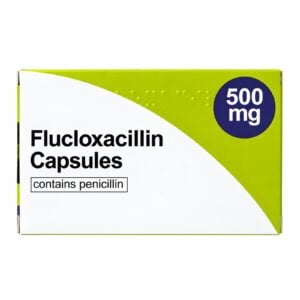
If you’re not allergic to penicillin, flucloxacillin is usually the first choice.
Complete our online consultation for a clinical assessment by one of our experienced prescribers to find out whether you’re eligible for a prescription to buy erythromycin 500mg tablets online.
Cellulitis is a bacterial infection of the deeper layers of the skin. The affected area becomes red or darker than usual, hot, swollen and painful, and the redness spreads. It often affects the lower legs, but can happen anywhere. It usually starts when bacteria get in through a break in the skin, such as a cut, graze, bite or cracked skin.
No. Cellulitis is not usually passed from person to person, because the infection is in the deeper layers of the skin.
UK guidance recommends clarithromycin, doxycycline or erythromycin for cellulitis if you’re allergic to penicillin. Clarithromycin and doxycycline are usually preferred because they are taken less often. Erythromycin is usually recommended if you’re pregnant, and doxycycline is not suitable in pregnancy or while breastfeeding. Your prescriber will recommend the most suitable option during your consultation.
No, but they are closely related. Both are macrolide antibiotics that work in a similar way. Clarithromycin is taken twice a day and usually causes fewer stomach side effects, while erythromycin is taken four times a day and is preferred in pregnancy.
You cannot buy erythromycin over the counter at a pharmacy as it is a prescription-only medication. This means you must have a prescription from a licensed prescriber to buy erythromycin for cellulitis.
If you think you have cellulitis and are allergic to penicillin, you can fill out our simple online questionnaire to start your consultation with one of our UK-registered prescribers. Then, if prescribed, you can buy erythromycin 500mg tablets through our online pharmacy with next day UK delivery.
You can order erythromycin 500mg tablets through an online pharmacy after a clinical assessment with a registered prescriber. A prescriber will only prescribe erythromycin if it’s clinically appropriate for you and your situation.
Do not buy antibiotics from pharmacies or websites that do not require a consultation with a medical professional.
At My Chemist Plus, you can have a free consultation with a UK-registered, experienced prescriber for erythromycin. If prescribed, you can order erythromycin online with UK-wide next day delivery. Fill out a quick health questionnaire to get started.
Always follow your prescriber’s instructions and complete the full course of treatment even if you start feeling better. If you finish your course and still feel unwell, speak to your doctor or pharmacist.
- Take one tablet four times a day at evenly spaced times. For instance, one in the morning, one at midday, one in the late afternoon and one at bedtime.
- Swallow the tablet whole with water – do not crush or chew it.
- Follow the directions on your label about food, as this can vary between brands.
If you forget to take a dose, take it as soon as you remember, unless it’s nearly time for your next dose. In that case, skip the missed dose. Do not take two tablets at the same time to make up for a forgotten dose.
For adults with cellulitis, the usual dose is 500mg four times a day for 5 days. It’s very important you follow your prescriber’s advice and finish the full course.
Many people notice the redness, swelling and pain start to improve within 2 to 3 days. If the redness is still spreading after 2 to 3 days, or you feel worse, seek medical advice.
Raise the affected area, for example on a pillow, to reduce swelling. Drink plenty of fluids, and take paracetamol or ibuprofen for pain if they’re suitable for you.
It can help to draw around the edge of the redness with a pen when you start treatment, so you can see whether it is getting smaller. The redness may spread slightly in the first day or two before it starts to improve.
Yes. Erythromycin is the macrolide antibiotic usually recommended during pregnancy and breastfeeding if you’re allergic to penicillin. Let your prescriber know during your consultation so they can offer you the right guidance.
Erythromycin interacts with a number of medicines, so tell your prescriber about everything you take. In particular, mention:
- Statins, such as simvastatin or atorvastatin
- Warfarin or other blood thinners
- Colchicine, used for gout
- Digoxin or medicines for an irregular heartbeat
- Theophylline, used for asthma or COPD
- Carbamazepine, used for epilepsy
- Ciclosporin or other medicines that affect your immune system
- Any medicine that can affect your heart rhythm
Alcohol does not interact with erythromycin. But, it’s a good idea to avoid drinking alcohol while you’re unwell, as it can make side effects such as nausea worse.
Erythromycin should not usually affect your ability to drive. If you feel unwell or dizzy, do not drive or operate machinery until you feel better.
Erythromycin does not affect the contraceptive pill directly. It also does not affect the emergency contraceptive pill. But, erythromycin can cause vomiting or diarrhoea in some people.
If you’re vomiting or have diarrhoea for more than 24 hours, this may prevent your contraceptive pill from working. To find out what to do, read the patient information leaflet that comes with your contraceptive medication, speak to your doctor, or visit the NHS website for guidance.
Call 999 or go to A&E if you have a skin infection and you:
- Feel very unwell, confused or very drowsy
- Have a high temperature, shivers or a fast heartbeat
- Have redness spreading very quickly, or skin that is very painful, blistering or turning dark
- Have swelling around your eye or problems with your vision
Get urgent advice from a GP or NHS 111 if the redness is still spreading after 2 to 3 days of antibiotics. These symptoms need prompt assessment rather than waiting for a delivery.
Patient Information Leaflet



Regulated and Safe

General Pharmaceutical Council
My Chemist Plus is registered and regulated by the GPhC, who are the official body that regulates and inspects all pharmacies in the UK. They are responsible to ensure we provide the highest standards in care.

LegitScript certification
My Chemist Plus is certified by Legit Script, who monitors online pharmacies to evaluate compliance, adherence and licensing to regulation.
References
- National Institute for Health and Care Excellence (NICE). Cellulitis and erysipelas: antimicrobial prescribing (NG141). Available from: https://www.nice.org.uk/guidance/ng141
- NHS. Cellulitis. Available from: https://www.nhs.uk/conditions/cellulitis/
- NHS. Erythromycin. Available from: https://www.nhs.uk/medicines/erythromycin/
- EMC Patient Information Leaflet (Doxycycline 100mg capsules). Available from: https://www.medicines.org.uk/emc/files/pil.403.pdf