
 GPhC Registered: 9012621
Nizoral Dandruff Treatment 2% Shampoo 100 ml
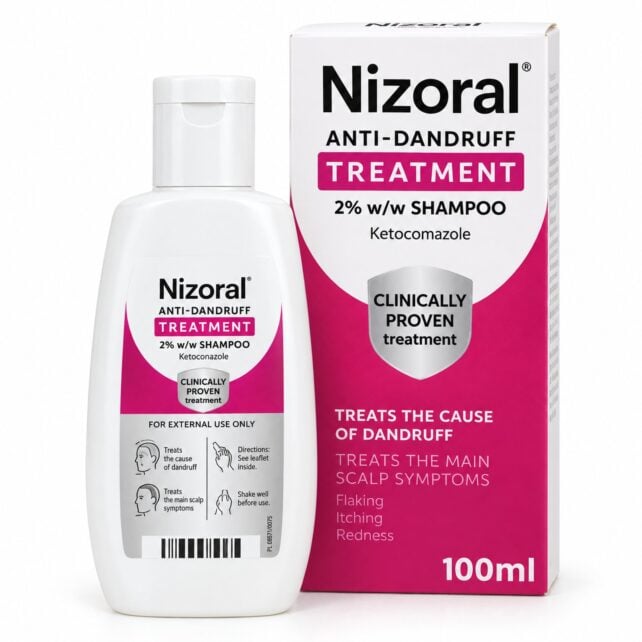
Nizoral Dandruff Treatment 2% Shampoo 100 ml
• Antifungal shampoo for dandruff and seborrhoeic dermatitis
• Helps reduce flaking, itching and scalp irritation
• Pharmacy medicine following online assessment
• Regulated service with delivery available
Want your order delivered on Tuesday?
Order now and we'll dispatch it on the next working day.
Experienced UK-registered prescribers
Owned by qualified doctors
2-minute consultation
UK-wide express delivery
About the product
What is Nizoral Dandruff Treatment 2% Shampoo?
Nizoral Dandruff Treatment 2% Shampoo is a medicated antifungal shampoo containing ketoconazole 2% w/w, equivalent to 20 mg of ketoconazole per gram of shampoo. It is used to treat and help prevent dandruff and seborrhoeic dermatitis, conditions commonly associated with overgrowth of the yeast Malassezia on the scalp.
Nizoral helps treat the underlying yeast associated with these scalp conditions rather than simply washing away visible flakes. It can also help reduce associated itching, redness, scaling and irritation.
This product page refers to the 100 ml pack of Nizoral Dandruff Treatment 2% Shampoo supplied as a Pharmacy medicine. A short pharmacy consultation may be required before purchase to make sure it is suitable for you.
How does Nizoral Shampoo work?
Ketoconazole is an antifungal medicine. It works by interfering with the cell membrane of susceptible fungi and yeasts, including Malassezia, which is strongly associated with dandruff and seborrhoeic dermatitis.
By reducing the amount of Malassezia on the scalp, Nizoral can help reduce flaking, scaling, redness and itching. Ketoconazole also has anti-inflammatory activity that may contribute to symptom relief.
What is Nizoral Shampoo used for on this page?
On this product page, Nizoral Dandruff Treatment 2% Shampoo is used specifically for:
– Treatment of dandruff
– Treatment of seborrhoeic dermatitis of the scalp
– Prevention of dandruff and seborrhoeic dermatitis returning after symptoms have been brought under control
The licensed product information also includes use of ketoconazole 2% shampoo for pityriasis versicolor. If you are using the shampoo for a body rash rather than a scalp condition, speak to a pharmacist or doctor to confirm that the diagnosis and treatment schedule are appropriate.
Who may be suitable for Nizoral Shampoo?
Nizoral may be suitable if:
– You are an adolescent or adult with dandruff or seborrhoeic dermatitis
– You have scalp flaking, scaling, itching or redness that is consistent with one of these conditions
– You can use the shampoo according to the recommended treatment schedule
– You are not allergic to ketoconazole or any of the other ingredients
Who should not use Nizoral Shampoo or needs medical advice first?
Do not use Nizoral if you:
– Are allergic to ketoconazole or any ingredient in the shampoo
– Have previously had a serious reaction to ketoconazole-containing products
Speak to a pharmacist or doctor before use if:
– You are unsure whether your symptoms are dandruff or seborrhoeic dermatitis
– Your scalp is very inflamed, broken, weeping, infected or unusually painful
– You have significant or unexplained hair loss
– Symptoms are severe, spreading or repeatedly returning despite treatment
– You have been using a topical corticosteroid on the scalp for a prolonged period
If you have been using a topical corticosteroid for a long time, it should generally be withdrawn gradually over 2 to 3 weeks while Nizoral is introduced, rather than stopped suddenly, to reduce the chance of a rebound flare.
How do I use Nizoral Dandruff Treatment 2% Shampoo?
For dandruff and seborrhoeic dermatitis:
– Wet the hair and scalp thoroughly
– Apply enough shampoo to wash the affected scalp and hair
– Massage gently to produce a lather
– Leave the shampoo on the scalp for 3 to 5 minutes
– Rinse thoroughly with water
– Use twice weekly for 2 to 4 weeks
To help prevent dandruff or seborrhoeic dermatitis returning:
– Use once every 1 to 2 weeks after the initial treatment course if needed
Usually a palmful of shampoo is sufficient for one wash. Do not use more often than directed unless advised by a healthcare professional.
What if Nizoral gets in my eyes?
Avoid contact with the eyes. If the shampoo gets into your eyes, rinse them thoroughly with water.
Side effects and when to get help
Side effects are uncommon. Possible effects include scalp or application-site irritation, burning, itching, redness, dry skin, changes in hair texture, rash or folliculitis.
Rarely, people may develop an allergic reaction, contact dermatitis or eye irritation. Hair colour changes have also been reported, particularly in chemically treated or grey hair.
Stop using the shampoo and seek medical advice if you develop marked swelling, hives, severe irritation, a widespread rash or another significant allergic reaction.
If your scalp has not cleared after 4 weeks of treatment, speak to a doctor or pharmacist.
How it works
Online consultation
Fill out a simple online form with no GP or pharmacy visits.
Clinical review
A UK-registered pharmacist reviews your details to decide the best treatment option for you.
Receive your prescription
If prescribed, you can get express delivery in discreet packaging right to your doorstep.
Delivery Information
Royal Mail Tracked 24
1–2 working days
£3.99
Royal Mail Special Delivery
Guaranteed next working day delivery
£8.95
Discreet Packaging
All orders are sent in plain, unmarked packaging with no indication of the contents. Your privacy is our priority.
Frequently Asked Questions
Nizoral Dandruff Treatment Shampoo contains ketoconazole 2% w/w, equivalent to 20 mg of ketoconazole per gram of shampoo.
It is used to treat and help prevent dandruff and seborrhoeic dermatitis. Ketoconazole targets the yeast Malassezia, which is commonly involved in these conditions.
Use it twice a week for 2 to 4 weeks. Once the condition is controlled, it can be used once every 1 to 2 weeks to help prevent it returning.
Leave the shampoo on the affected scalp for 3 to 5 minutes before rinsing thoroughly.
Yes. On days when you are not using Nizoral, you can normally use your usual shampoo if it does not irritate your scalp.
Dandruff and seborrhoeic dermatitis can recur. Nizoral can treat an active episode and can then be used every 1 to 2 weeks if needed to help prevent symptoms returning.
For dandruff and seborrhoeic dermatitis, the licensed treatment schedule is twice weekly for 2 to 4 weeks rather than daily use. Do not use it more often than directed unless advised.
The UK product information states that there are no known risks associated with use of the shampoo during pregnancy or breastfeeding. Ask a healthcare professional if you have any concerns.
Hair loss has been reported uncommonly with ketoconazole shampoo. Hair loss can also occur because of scalp inflammation or other conditions, so significant or unexplained hair loss should be assessed.
Mild irritation can occasionally occur. Stop treatment and seek advice if you develop severe burning, redness, swelling, a widespread rash or signs of an allergic reaction.
If your scalp has not cleared after 4 weeks of appropriate treatment, speak to a pharmacist or doctor so that the diagnosis and treatment can be reviewed.
Nizoral Dandruff Treatment Shampoo is a Pharmacy medicine. A short consultation helps confirm that your symptoms are suitable for self-care and that there are no warning signs suggesting another scalp condition.
No. This information supports, but does not replace, advice from your GP, pharmacist or another qualified healthcare professional. Always follow the directions on the pack and the patient information leaflet supplied with your medicine.

Regulated and Safe

General Pharmaceutical Council
My Chemist Plus is registered and regulated by the GPhC, who are the official body that regulates and inspects all pharmacies in the UK. They are responsible to ensure we provide the highest standards in care.

LegitScript certification
My Chemist Plus is certified by Legit Script, who monitors online pharmacies to evaluate compliance, adherence and licensing to regulation.